
Vibe Gaming• 6 min read
The Weekend Game Developer: Exploring AI's Impact on Rapid Prototyping in Gaming
Discover how AI is revolutionizing game development, enabling aspiring creators to build playable games in a single weekend.
ALTERED BRILLIANCE IS LIVE.ALTERED BRILLIANCE IS LIVE ON GOOGLE PLAY.Read the product story →
Discover how AI is revolutionizing game development, enabling aspiring creators to build playable games in a single weekend.
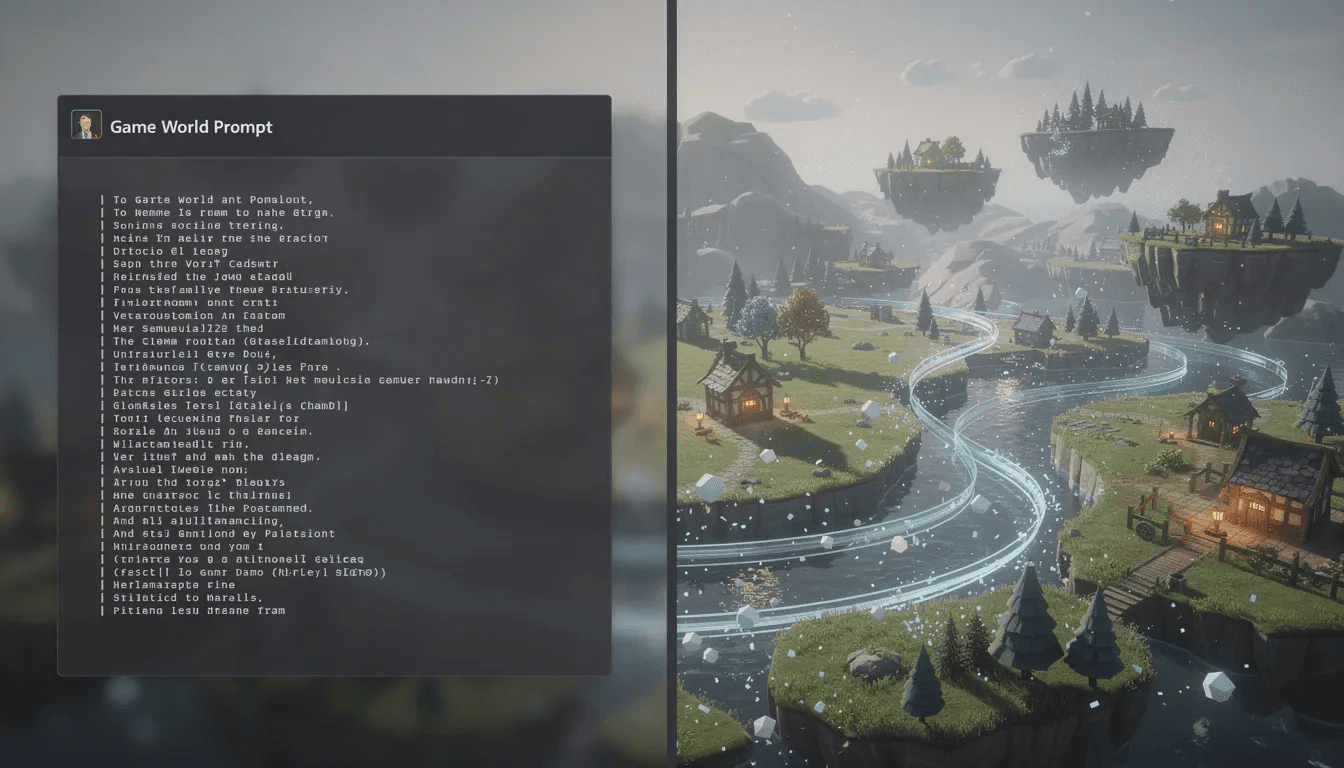
The landscape of game development is undergoing a transformative shift, largely fueled by the burgeoning capabilities of Artificial Intelligence. What once required extensive coding knowledge, dedicated art teams, and significant time investment is now becoming accessible to individual creators, allowing for rapid prototyping and even fully functional game builds within a single weekend. This paradigm, often termed "vibe coding," emphasizes creative intuition and iterative design over traditional, labor-intensive development pipelines.
At the core of this revolution are AI game builders capable of translating natural language prompts into executable game logic and assets. This emerging ecosystem is not merely a niche curiosity; industry projections, such as a GlobeNewswire market report, indicate that the generative AI in gaming market is set to grow from $1.79 billion in 2025 to $2.21 billion in 2026. This rapid expansion underscores the serious potential and increasing adoption of these tools. Companies like Rosebud AI claim over 70,000 creators are already leveraging their platforms, while industry giants like Unity and NVIDIA are integrating advanced AI features (like Muse, Sentis, and ACE) directly into their engines, making AI-generated dialogue and assets standard production tools.
The fundamental premise is straightforward: bypass the boilerplate code and asset creation, allowing developers to focus on the "vibe" or core concept. The trick, as demonstrated by the ability to create a playable trivia game with just a few prompts, lies in scope management. By focusing on games with simple, paragraph-length rule sets, AI tools can handle the heavy lifting, enabling creators to finish small, polished projects rather than abandon ambitious, overscoped ones. This approach fosters a culture of completion and learning.
For those dipping their toes into AI-assisted game development, several project types are perfect for a single evening's work. A niche trivia game, where an LLM generates and scores questions, requires no assets or complex physics. A daily word-guessing game, akin to Wordle, leverages AI for fresh word lists and clever hints. Even a pixel-art endless runner becomes manageable by using AI asset tools like Meshy to generate sprites, significantly cutting down on art development time. Lastly, idle/clicker games benefit immensely from AI-written flavor text, where the AI crafts engaging upgrade descriptions based on a simple premise, making the theme the star.
Stepping up the complexity, a full weekend allows for more iterative and engaging projects. A branching text adventure with live AI dialogue moves beyond pre-scripted narratives, with the AI dynamically generating dialogue based on player input, ensuring unique playthroughs. This showcases the power of AI-generated dialogue in game development. Other intermediate projects include match-3 puzzles, party trivia games, and visual novels, where AI can assist with level design, question generation, and narrative branching, respectively.
Even more ambitious projects, traditionally requiring months or years, can now be scoped down to a weekend with significant AI assistance. Creating a basic roguelike, with its procedural generation, or a simple town simulation game, benefits from AI's ability to generate maps, item descriptions, and NPC behaviors. The advent of voice-controlled games and live multiplayer experiences also falls within the advanced weekend tier, where AI handles complex interaction logic and backend support, making these sophisticated genres surprisingly accessible.
The key takeaway for aspiring AI game developers is to start smaller than you think you need to. The emphasis is on tangible results and learning through doing. This iterative process, facilitated by AI, allows creators to experiment with game mechanics, narrative structures, and artistic styles without the prohibitive barriers of traditional development. It encourages a playful, experimental approach to game design, where ideas can be rapidly tested and refined.
This trend has profound implications for the gaming industry. It lowers the barrier to entry for new talent, fostering diverse voices and innovative concepts. It also enables established developers to prototype ideas much faster, potentially leading to more experimental and varied game releases. As AI tools continue to evolve, becoming more sophisticated and intuitive, the line between amateur and professional game development will blur further, ushering in an era where creativity and a good "vibe" are the primary currencies.
Ultimately, the rise of vibe-coded games built over a weekend signifies more than just a technological advancement; it represents a shift in creative empowerment. It’s an invitation for anyone with an idea to become a game creator, transforming abstract concepts into interactive experiences with unprecedented speed and ease. The future of gaming development is not just about what can be built, but how quickly and inclusively it can be done, thanks to the remarkable capabilities of AI.
Source Insight: This report was curated based on original coverage from questera.ai.
Source: questera.ai