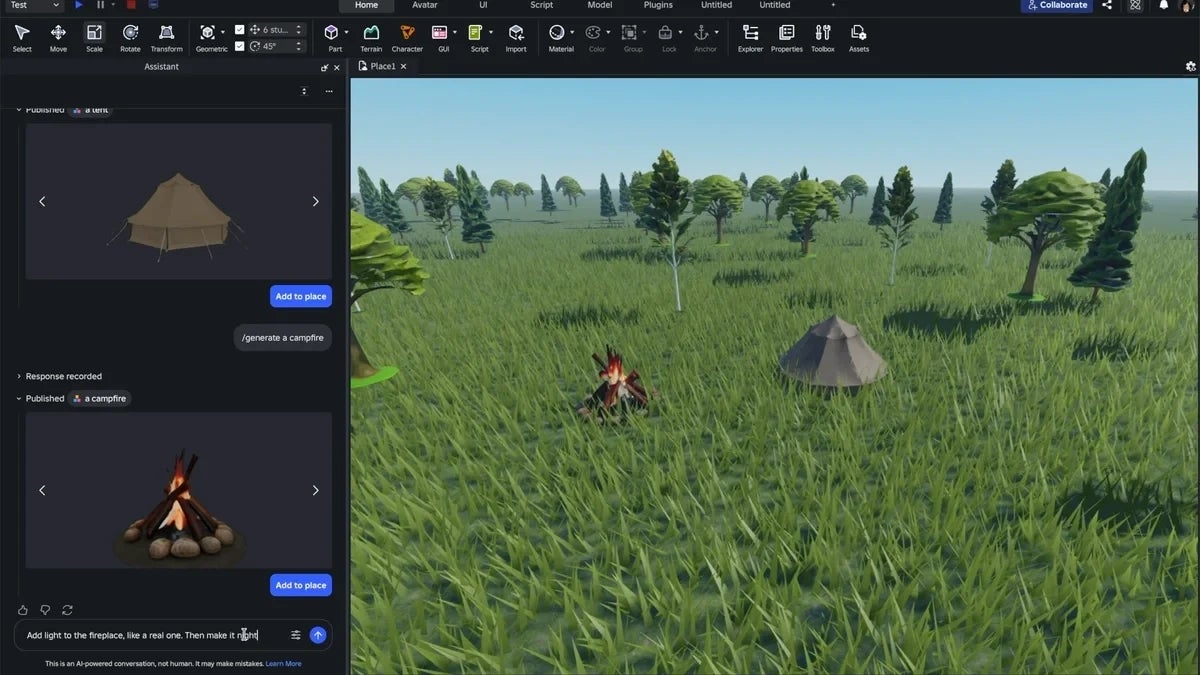
The landscape of interactive entertainment is undergoing a seismic shift, vividly illustrated by the recent Game Developers Conference (GDC) 2026. What was once met with skepticism and fear has blossomed into an era of enthusiastic embrace, as generative AI moves from theoretical promise to tangible, production-ready implementation. The conversation at a recent GDC side event, hosted by GenAI Assembling and Tripo AI, brought together pioneering founders to dissect this transformation.
Shifting Tides at GDC: From Skepticism to Excitement
The prevailing sentiment at GDC 2026 marked a stark contrast to previous years. While GDC 2025 was characterized by anxieties surrounding job displacement and a general dislike toward AI, this year's conference exuded a palpable sense of discovery and potential. Industry leaders like Simon Song of Tripo AI, Jani Penttinen of Bitmagic, and Kuangye Guo of Glass Bead Games observed a collective realization: AI is no longer a threat but a powerful assistant that enhances productivity and unleashes new creative avenues. The groundwork laid by early text-to-image AI companies, proving the efficiency gains, played a crucial role in warming the industry's reception.
The Commoditization of 3D Generation
One of the most significant advancements lies in the commoditization of 3D asset generation. Tripo AI, for instance, is pioneering a model where 3D assets are accessible via API, moving away from the laborious, handcrafted processes of the past. Simon Song articulated that this benefits both professional 3D artists, who can now generate models at an unprecedented pace, and user-generated content (UGC) platforms. This democratization enables everyday users, regardless of technical skill, to create intricate 3D assets within games, mirroring the success of text-to-image and video UGC communities. This paradigm shift suggests a future where the sheer variety of games expands dramatically, fostering niche titles that were previously economically unviable.
The Rise of AI-Native Game Engines and Studios
The rapid evolution of AI has also given birth to AI-native game engines and lean, agent-driven studios. Bitmagic, for example, is building an engine specifically designed to integrate new AI research seamlessly, bypassing the limitations of legacy engines like Unity or Unreal. Their philosophy revolves around a prompt-play-iterate loop, allowing creators to instantly visualize and interact with their creations as they build. Similarly, Glass Bead Games operates with a mere four-person team, where each member effectively functions as a small studio, leveraging multiple AI agents to work on features concurrently. This approach emphasizes asking: "Can an agent do it, and where does it need our input?", leading to incredibly efficient and agile development cycles.
Reshaping Roles and Empowering Creators
The integration of AI is fundamentally reshaping roles within the game industry. While some foresee a split between highly skilled creators and a broader base of consumers, the consensus among these pioneers is that AI empowers individuals to move "up the value chain." What once required hundreds of developers to handcraft every component can now be achieved by smaller teams, amplified by AI's capabilities. This means game designers can focus on the core discipline of player fantasy and experience, unburdened by the minute details of asset creation. The ambition shifts from constrained functionality to exploring broader creative possibilities, allowing individuals to "do more" and express their unique visions.
The Intricacies of AI-Driven Development: Lessons Learned
The journey into AI-driven game development has not been without its challenges and learning curves. Simon Song recounted Tripo AI's initial struggles with client adoption, noting a turning point when the technology began providing demonstrable value in real-world workflows, reflected in a significant increase in paid conversion rates. Jani Penttinen shared Bitmagic's experience with a product designed to generate entire games from a single prompt, which ultimately failed to resonate. This failure highlighted a crucial insight: true creators crave iteration and refinement, not just a one-shot generation. Meanwhile, Kuangye Guo's Glass Bead Games learned the importance of player agency after an earlier version of their game frustrated users by forcing content upon them, underscoring that player expression remains paramount.
The Future of Interactive Content: Beyond Games
The implications of generative AI extend far beyond traditional gaming. Simon Song envisions 3D as a new medium, with games being just one facet. He foresees the emergence of UGC interactive content platforms, akin to a "3D TikTok," where anyone can become an interactive content creator, sharing ideas and expressing feelings in novel ways. This vision suggests a future where interactive experiences become more pervasive and personalized, fostering a new form of media that is both accessible and deeply engaging. However, Jani Penttinen wisely reminds us that many users simply desire to share small, meaningful moments with friends, an important consideration for product development.
The Unseen Power of Explicit Documentation
A surprising benefit emerging from AI-native workflows is the increased demand for explicit documentation. Kuangye Guo highlighted that AI agents perform significantly better when knowledge is clearly articulated in documentation. This necessity forces development teams to confront and define vague concepts, solidifying a game's guiding principles and core identity. This rigor in documentation, prompted by AI's requirements, ultimately leads to a more coherent and well-understood creative vision.
Conclusion: An Era of Amplified Creativity
The shift at GDC 2026 unequivocally signals that generative AI has matured into a powerful, practical tool for game development. It's an era where the barriers to creation are significantly lowered, empowering individuals and small teams to achieve what was once the sole domain of large studios. The future promises not only more efficient production but also a dramatic expansion in the diversity and personal nature of interactive experiences, truly ushering in a new age of amplified creativity.
Source Insight: This report was curated based on original coverage from genaiassembling.substack.com.