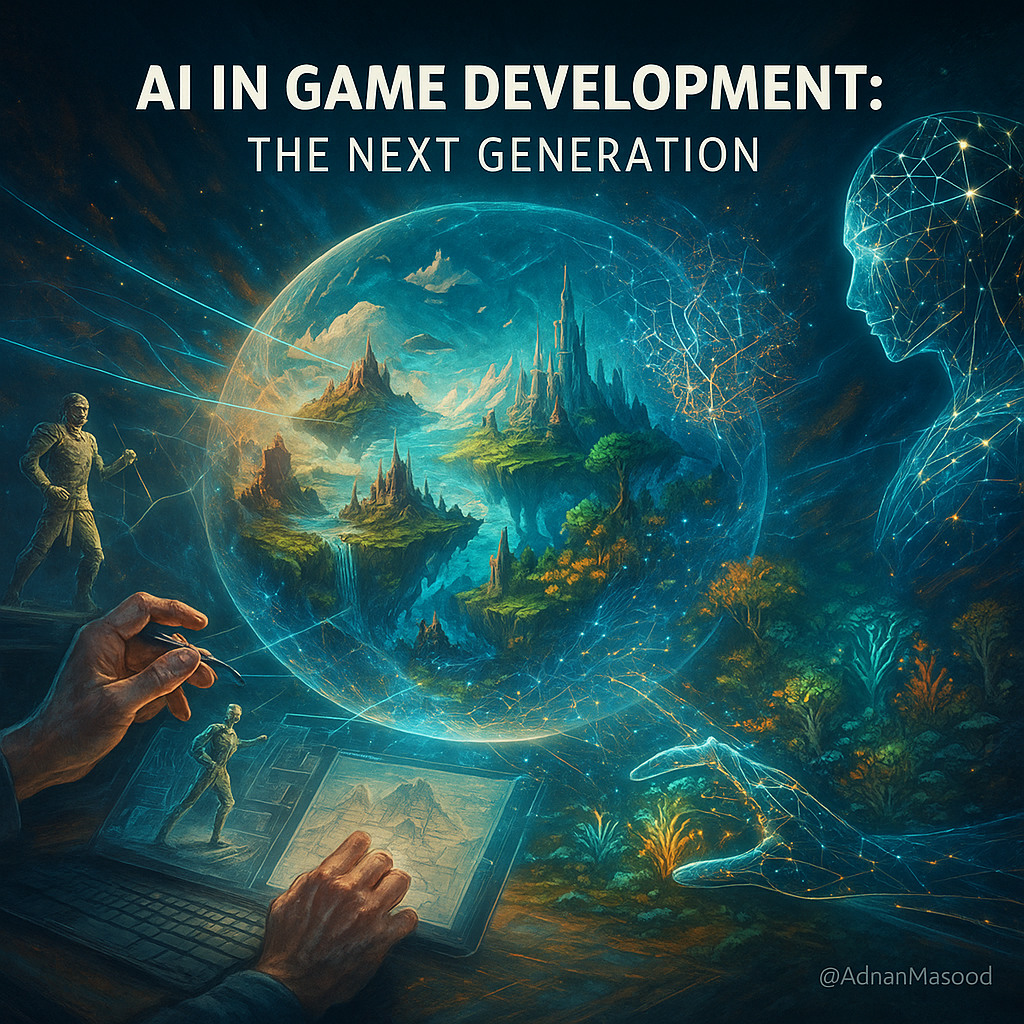
The evolution of video games has been a testament to relentless innovation, with artificial intelligence (AI) emerging as a pivotal driving force behind this transformation. From crafting more believable Non-Player Characters (NPCs) to enabling dynamic, adaptive narratives and expansive world-building, AI is fundamentally reshaping the landscape of interactive entertainment. As virtual realms grow increasingly immersive and realistic, AI's potential continues to expand, pushing the boundaries of what is achievable in modern gaming.
The Foundational Role of AI in Game Design
AI's influence permeates nearly every facet of game development, fostering more interactive and engaging experiences. Its contributions are multifaceted, touching upon core design principles and execution:
- NPC Behavior: AI empowers NPCs to exhibit remarkably realistic responses and adaptive behaviors that react intelligently to player actions, moving far beyond static scripting.
- Procedural Generation: AI-driven algorithms can autonomously generate intricate game levels, diverse worlds, and varied landscapes, significantly reducing the manual effort traditionally required in design.
- Adaptive Storytelling: Narratives can now dynamically adjust based on player choices, delivering uniquely personalized gameplay journeys that branch and evolve.
- Automation: From extensive testing to debugging and quality assurance, AI automates laborious processes, substantially shortening development cycles.
- Enhanced Game Physics: AI refines animations, physics-driven interactions, and character movements, contributing to a heightened sense of realism.
Transforming NPCs with Advanced AI Tools
Historically, NPCs were often confined to predictable, repetitive behaviors due to rigid scripting. However, contemporary AI game development tools have ushered in an era where NPCs can learn, adapt, and respond with remarkable dynamism, imbuing game worlds with an unparalleled sense of authenticity. A prime example is Rockstar Games' Red Dead Redemption 2.
In Red Dead Redemption 2, AI was meticulously employed to create NPCs with independent schedules, discernible emotions, and nuanced reactions to player interactions. These NPCs engage in routine behaviors such as eating, working, and socializing, enriching the virtual environment. Their AI responds contextually to dynamic environmental changes and player actions, establishing a new benchmark for realism in character interaction.
AI in Storytelling: A Creative Partnership
The integration of AI into narrative structures raises profound questions about the future of storytelling in games. AI's capacity to process player decisions and adapt dialogue, quests, and character interactions in real-time is revolutionary. Games like AI Dungeon leverage machine learning to generate entire stories dynamically, hinting at a future of limitless narrative possibilities where AI-driven engines ensure no two players will ever experience the exact same storyline.
However, it is crucial to recognize that AI is positioned as a powerful enhancement to creativity, not a replacement for human writers. While AI can generate dynamic content and suggest narrative avenues, it currently lacks the profound depth of human emotion, genuine originality, and cultural nuance essential for truly compelling narratives. Instead, AI serves as an invaluable co-writer, empowering game developers to craft more interactive, expansive, and personalized storytelling experiences.
The Impact of AI on World-Building
As game worlds grow in scale and complexity, AI plays an indispensable role in their construction and refinement. Its contributions to world-building are extensive:
- Data Collection and Analysis: AI learns from vast datasets of real-world terrain, architectural styles, and topographical information to construct highly realistic environments. Machine learning algorithms identify patterns in natural and man-made structures, enabling developers to forge authentic virtual landscapes.
- Procedural Generation: AI-driven procedural generation allows for the creation of immense, diverse worlds with minimal human intervention. Titles like Minecraft and No Man's Sky exemplify this by using AI to generate infinite, varied landscapes, ecosystems, and structures.
- Optimization: AI optimizes textures, lighting, and environmental details, ensuring efficient rendering and seamless gameplay. This capability is vital for smooth transitions in open-world games, minimizing lag and graphical inconsistencies.
- Real-Time Adaptation: AI can dynamically alter the game world in response to player interaction. For instance, if a player destroys a structure, AI can realistically generate debris and environmental effects. In survival genres, AI can modify ecosystems based on player actions, such as hunting or resource gathering, creating a living, breathing world.
- Testing and Refinement: AI significantly aids in debugging and polishing game worlds by identifying issues like collision bugs, corrupted textures, and performance bottlenecks. It can dynamically adjust parameters to deliver a more refined and stable player experience.
Harnessing AI in Modern Game Development
Game developers are strategically deploying AI to fundamentally transform game design workflows and player experiences:
- Training sophisticated AI models to enable truly adaptive NPC behaviors, leading to smarter, more interactive in-game characters.
- Utilizing procedural generation for vast open worlds, dramatically reducing the labor of manual level design and allowing for unparalleled scale.
- Implementing AI-based storytelling engines to craft dynamic narratives that react and evolve based on granular player decisions.
- Applying AI for automated bug detection and rigorous testing, accelerating development cycles and elevating overall game quality.
- Augmenting player immersion through advanced features like AI-generated voiceovers and context-aware environmental responses.
The strategic adoption of AI isn't just about creating more efficient development processes; it's about unlocking entirely new creative possibilities and delivering experiences that were once confined to the realm of science fiction. The future of gaming, undeniably, is intertwined with the continued evolution and intelligent application of artificial intelligence.
Source Insight: This report was curated based on original coverage from webosmotic.com.