
Vibe Gaming• 6 min read
The Dawn of Vibe Coding: Revolutionizing Game Development with AI-Powered Engines
The gaming landscape is on the cusp of a profound transformation with the advent of "vibe coding.
ALTERED BRILLIANCE IS LIVE.ALTERED BRILLIANCE IS LIVE ON GOOGLE PLAY.Read the product story →
The gaming landscape is on the cusp of a profound transformation with the advent of "vibe coding.
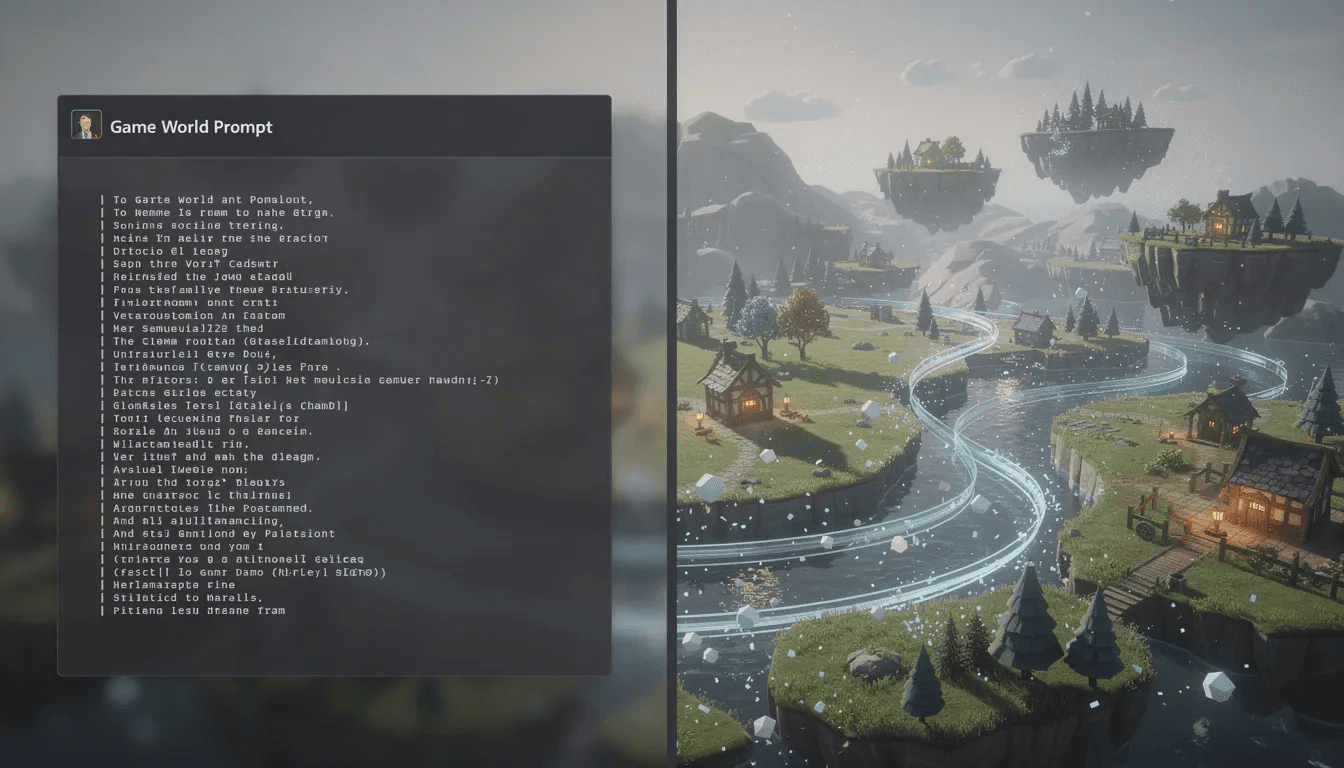
The realm of game development is perennially seeking innovations that streamline creation and empower a broader spectrum of artists and designers. Enter vibe coding, a paradigm shift poised to redefine how interactive experiences are brought to life. Far beyond a mere chatbot integration, vibe coding leverages advanced AI to translate natural language prompts into functional game code and assets, fostering an unprecedented level of creative fluidity.
At its heart, vibe coding promises to bridge the historical chasm between creative vision and technical execution. For generations of builders nurtured by platforms like Minecraft and Roblox, the transition from imaginative concept to playable game often faltered at the hurdle of scripting. Vibe coding aims to eliminate this friction. Imagine describing a complex game mechanic in plain English and seeing it materialize instantly within a 3D environment, allowing for iterative refinement with subsequent prompts. This ability to remain in a continuous creative flow—tweaking and evolving ideas without grappling with syntax errors or context switching—is the central allure of this emerging methodology.
Not all AI integrations are created equal. The distinction between a superficial chatbot overlay and a genuinely transformative vibe coding engine lies in its underlying architecture. Six critical features differentiate engines that truly enable this paradigm: declarative syntax, Entity-Component-System (ECS) architecture, semantic tuning, CLI or agent control, automated verification, and generative asset pipelines. These elements work in concert to interpret intent, isolate changes, ensure correctness, and efficiently generate assets, moving vibe coding from experimental to reliable.
Traditional programming often demands imperative instructions—telling the computer how to perform a task step-by-step. Vibe coding, however, thrives on declarative syntax. Here, creators express what they want, not the intricate how. For instance, instead of coding individual movement functions, one might simply state, “add a platform that moves left and right every two seconds.” The engine, understanding this desired state, then handles the underlying implementation. This approach allows for faster iteration, as AI agents update small, isolated configuration definitions rather than rewriting extensive scripts, significantly reducing the likelihood of introducing new bugs.
The Entity-Component-System (ECS) architecture is a cornerstone for effective vibe coding. In an ECS model, every game object is an entity, its properties are components (e.g., position, velocity), and behaviors are systems (e.g., rendering, physics). This modularity is paramount for AI-driven development because changes remain localized. An AI agent can add, remove, or modify a single component without affecting unrelated elements, ensuring that an instruction like “make only the enemy NPCs move faster” precisely targets the relevant velocity components without unintended side effects across the entire project.
A truly intelligent vibe coding engine possesses semantic tuning—the capacity to interpret the intent behind a prompt, not just its literal phrasing. This means understanding that “make the jump feel floatier” implies adjusting gravity or air time, not merely adding a floating object. Critically, these engines maintain continuous conversational context, allowing for iterative refinement. Subsequent prompts build upon previous instructions, enabling a natural dialogue with the creation tool. If a designer states, “make the last section harder” in an obby game, a semantically aware engine interprets “harder” as faster obstacles or shorter platforms, not increased enemy health.
For vibe coding to scale, engines must expose a Command Line Interface (CLI) or direct agent control. This allows AI agents to manage projects programmatically—running builds, querying scene states, and executing commands without requiring manual interaction with a visual editor. This machine-to-machine interaction is essential for integrating vibe coding into automated pipelines and for enabling sophisticated AI agents to orchestrate complex development tasks efficiently.
The efficacy of vibe coding is amplified by automated verification, which continuously checks for logical errors and design inconsistencies. This real-time feedback loop ensures that creators remain in a creative flow, free from constant manual debugging. Complementing this are generative asset pipelines, where AI can produce 3D models, textures, animations, and sound effects based on textual descriptions. These pipelines often include features like Level of Detail (LOD) optimization, ensuring performance across various platforms. The combination of these features democratizes asset creation, removing common barriers to entry for aspiring game developers and allowing for rapid prototyping and iteration previously unattainable.
Source Insight: This report was curated based on original coverage from nilo.io.
Source: nilo.io