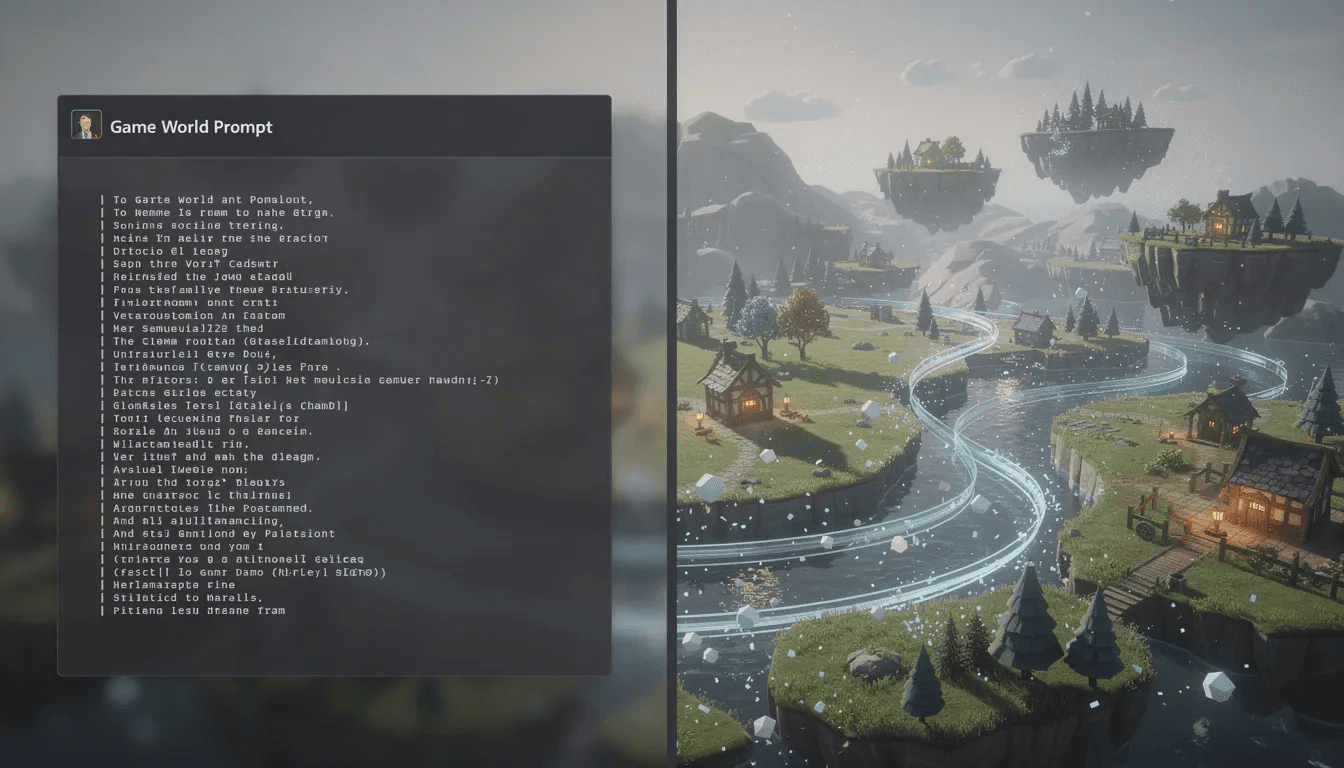
The gaming world stands at the precipice of a creative revolution, driven by the burgeoning power of AI game generators. What was once the exclusive domain of seasoned developers fluent in complex coding languages and intricate design software is now opening up to a much wider audience. Imagine articulating a game concept in plain English and witnessing a playable version materialize before your eyes—this is the promise, and increasingly the reality, offered by these innovative tools.
Democratizing Game Development
For solo visionaries, narrative artists, students, or agile small teams, AI game generators represent a paradigm shift. They dismantle traditional barriers to entry, accelerate the prototyping process, and unleash creativity unhindered by technical limitations. These platforms empower individuals to transition from ideation to interactive experience with remarkable speed. By leveraging advanced machine learning models, these tools automate various layers of game creation, transforming natural language descriptions into complete, playable games, replete with code, assets, and interactive mechanics.
The Mechanics of AI-Driven Creation
At their core, AI game generators utilize Procedural Content Generation (PCG) algorithms and sophisticated Large Language Models (LLMs). When a user inputs a prompt—for example, "make a cozy 2D farming sim with a day/night cycle"—the LLM interprets the intent, generating the foundational game logic, scripting, and even dialogue. Simultaneously, image generation models such as Stable Diffusion or DALL·E create visual assets, including sprites, backgrounds, UI elements, and character models, adapting to specified art styles like pixel art, cartoon, or low-poly 3D.
Leading the Charge: Key Platforms and Capabilities
Several platforms are at the forefront of this movement. Rosebud offers a free online environment to generate initial code, while Ludo.ai provides a Playable Generator for interactive experiences. GDevelop stands out as an open-source, no-code engine supporting both 2D and 3D game creation, and Jabali AI Game Maker facilitates game development without requiring any coding knowledge. These tools are democratizing access, allowing even novices to produce a wide array of game types, from 2D platformers and shooters to simple 3D environments, visual novels, and prototype multiplayer experiences.
Iteration and Refinement in Real-Time
One of the most compelling aspects of AI game generation is the capacity for real-time iteration. Users can refine their creations through conversational edits. A request like "Make enemies faster and add a health bar" or "Change the environment to a neon city aesthetic" can be processed instantly, with changes reflected in a live preview. This iterative feedback loop dramatically compresses development cycles, allowing creators to experiment freely and converge on their desired vision without the delays inherent in traditional game development workflows.
A Comprehensive Feature Set for Modern Creators
Today's AI game generators come equipped with a robust set of features. Gameplay creation is often facilitated through click-and-drag interfaces or chat-driven commands, supported by templates for popular genres. AI-assisted logic allows for complex "if this then that" systems and behavioral libraries, with AI assistants suggesting mechanics. AI image generation handles all visual assets, ensuring consistency in chosen art styles. Furthermore, narrative tools can generate branching dialogue, quest systems, and dynamic text. Crucially, most platforms offer multiplatform export (web, desktop, mobile) and real-time preview, ensuring broad accessibility and immediate feedback.
The Pipeline from Prompt to Playable Prototype
Understanding the underlying process illuminates the power of these tools. A user's natural language prompt is fed into a language model, which interprets the request and generates the necessary code and assets. These components are then assembled into a live preview, often running on established runtimes like HTML5/JavaScript or Godot-style scene systems. For instance, prompting for a "Top-down roguelike dungeon crawler with random rooms and three enemy types" would trigger the AI to generate a procedural scene system, distinct enemy behaviors, player controls, and a basic UI.
The Future is Conversational
The most significant implication of these advancements is the shift towards a more conversational interface for game creation. The technical jargon and intricate learning curves of traditional engines are giving way to intuitive, language-based interactions. This doesn't just speed up development; it fundamentally alters the creative process, allowing creators to focus on the imaginative aspects of game design rather than the technical minutiae. As these tools evolve, we can anticipate an even richer ecosystem where the only limitation is the creator's imagination, fostering an unprecedented era of diverse and innovative gaming experiences.
Source Insight: This report was curated based on original coverage from tesana.ai.