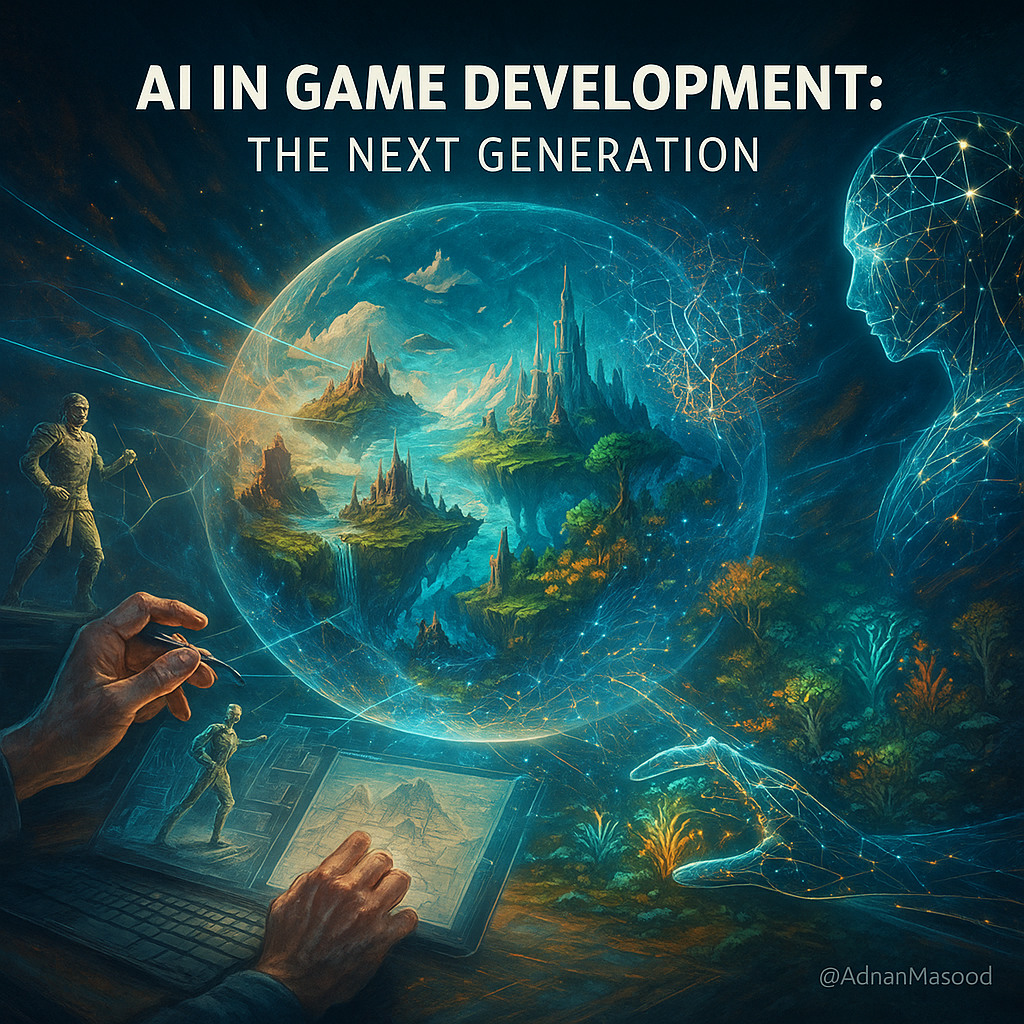
The gaming industry stands at the precipice of a profound transformation, driven by the accelerating integration of artificial intelligence. This shift is not merely an incremental improvement but a fundamental rethinking of how virtual worlds are created, inhabited, and experienced. Developers are increasingly leveraging AI to craft experiences that are more immersive, reactive, and personalized than ever before, signaling a new era for interactive entertainment.
AI-Powered Non-Player Characters: A New Paradigm for Interaction
One of the most significant advancements lies in the evolution of Non-Player Characters (NPCs). Gone are the days of static dialogue trees and predictable routines. Modern AI-driven NPCs are becoming sophisticated agents within the game world, capable of dynamic interaction, adaptive behavior, and even long-term memory of player actions. This creates a living, breathing ecosystem where every player choice can ripple through the game world, fostering emergent narratives and genuine consequences. Imagine NPCs who not only remember your name and past quests but also adapt their behavior based on your moral choices or combat style, leading to truly personalized encounters. This includes:
- Contextual Dialogue: NPCs maintain conversation context over numerous turns, recalling previous interactions, questlines, and moral decisions.
- Tailored Missions: Large Language Models (LLMs) can generate quests specifically suited to a player's preferred gameplay style, whether it's stealth, combat, or diplomacy.
- Societal Dynamics: Autonomous NPCs can form alliances, rivalries, and complex economic systems, generating storylines that evolve independently of developer scripting.
- Persistent Relationships: Characters can hold grudges, nurture friendships, or remember significant events across multiple play sessions and even expansions.
- Adaptive Difficulty: NPC behavior can dynamically adjust to player skill, ensuring a consistently challenging yet fair experience.
Generative AI: Reshaping Game Development and Visual Fidelity
The impact of AI extends far beyond character interaction, revolutionizing both the production pipeline and the visual fidelity of games. Generative AI tools are streamlining development, allowing studios to create larger, richer worlds in a fraction of the time. This includes automating tasks that were once labor-intensive, from asset creation to quality assurance.
- Enhanced Graphics: AI powers neural upscaling, transforming lower-resolution frames into crisp 4K visuals with superior anti-aliasing and detail. Frame generation technologies can double frame rates without introducing significant input lag, leading to smoother gameplay.
- Procedural Content Generation: GANs (Generative Adversarial Networks) can convert 2D sketches into full 3D models, generate diverse textures, and even animate characters automatically. This drastically reduces the manual effort required for asset creation.
- Real-time Lighting: AI denoising techniques are enabling real-time ray tracing and path tracing, bringing cinematic-quality lighting, reflections, and shadows to interactive environments.
- Automated Quality Assurance: AI can identify a vast majority of bugs during pre-alpha stages, significantly shortening testing cycles and accelerating overall production.
- Dynamic Environments: Procedural texturing ensures that surfaces like terrain or cityscapes exhibit unique patterns, eliminating repetitive tiling artifacts and enhancing realism.
The Convergence of Technologies: A Seamless Virtual Experience
When these AI advancements in NPCs, graphics, and procedural generation converge, the result is a seamless and incredibly rich virtual experience. Imagine game worlds where every blade of grass, every pebble, and every passerby feels unique and purposeful. The integration of neural rendering with real-time path tracing, combined with NeRF (Neural Radiance Fields) technology, promises environments that are rendered volumetrically from any angle, eliminating visual discrepancies like Level of Detail (LOD) pop-ins and maintaining realism across vast open worlds.
Human Creativity and Ethical Guardrails in an AI-Driven Future
Despite the incredible capabilities of AI, the human element remains paramount. AI excels at handling repetitive tasks, generating vast amounts of content, and optimizing processes, but human oversight is crucial for maintaining narrative cohesion, artistic vision, and emotional depth. Game designers will guide AI outputs, validate its creations, and ensure that the core storytelling and gameplay mechanics resonate with players. This collaborative approach allows developers to focus on creative direction while AI handles the heavy lifting.
Ethical considerations are also vital as AI becomes more embedded in gaming. Safeguards must be in place to protect the rights of voice actors and motion-capture performers whose work might be used to train AI models. Transparency measures are necessary to clearly identify AI-generated content, and privacy protocols must prevent NPC memory systems from inadvertently replicating real-world individuals. Blockchain technology can assist in tracking content provenance, ensuring that AI-driven games are developed and experienced both immersively and responsibly.
The Decade Ahead: Redefining Player Expectations
The profound integration of AI into gaming is not merely a passing trend; it is set to redefine player expectations for the next decade. From endlessly evolving worlds and deeply personal narratives to breathtaking graphics and intelligent adversaries, AI is paving the way for experiences that were once confined to science fiction. As developers continue to harness this powerful technology responsibly, the boundaries of interactive entertainment will undoubtedly expand in ways we are only just beginning to imagine.
Source Insight: This report was curated based on original coverage from techtimes.com.