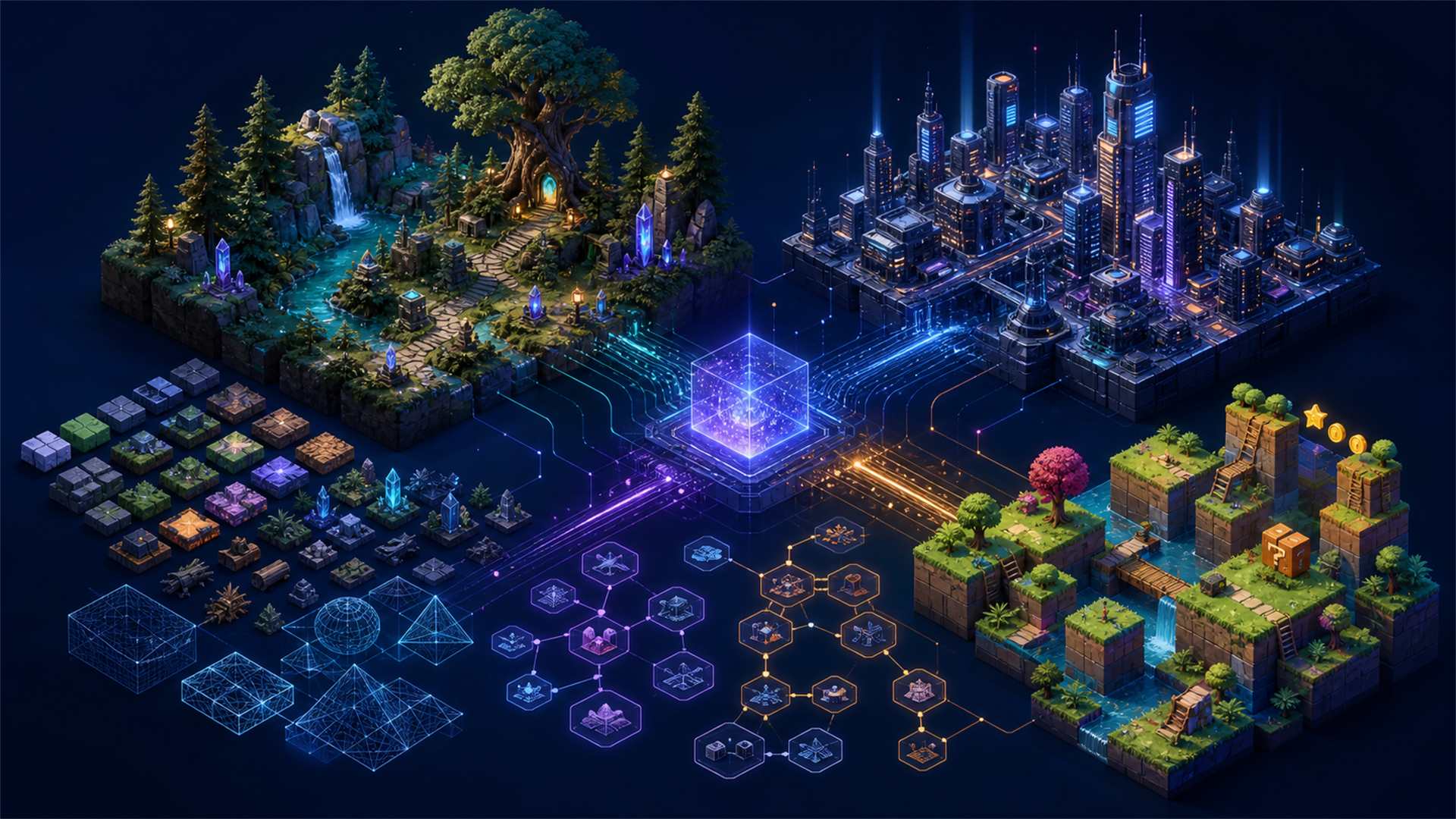
The gaming industry stands on the precipice of a profound transformation, driven by the accelerating capabilities of artificial intelligence. What was once the exclusive domain of skilled programmers and artists is now becoming accessible through AI game generators, platforms designed to transmute simple textual descriptions into complex, interactive digital worlds. These innovative tools are not merely assisting development; they are fundamentally reshaping the creative process, offering a glimpse into a future where imagination is the primary currency of game creation.
Understanding the AI Game Generator Paradigm
At its core, an AI game generator leverages sophisticated generative AI and machine learning models to automate virtually every facet of game development. Users are empowered to articulate their vision through natural language prompts, bypassing the traditional hurdles of coding or complex 3D modeling. The AI then orchestrates the creation of diverse elements, from intricate level designs and character models to nuanced game mechanics and environmental assets. This seamless workflow promises to dramatically reduce development cycles and lower the barrier to entry for aspiring creators.
The market’s embrace of this technology is reflected in staggering growth projections. The global AI in games market, encompassing a wide array of applications, is currently valued at an impressive $38.6 billion, with an anticipated compound annual growth rate (CAGR) of 26.3% through 2036. More specifically, the generative AI in gaming market alone is projected to reach $12.3 billion by 2034. These figures underscore a significant industry shift, with over 62% of game developers now reportedly utilizing AI-powered asset generation, and a notable one in five new Steam games openly disclosing the integration of generative AI. This burgeoning trend signals a pivotal moment for both established studios and independent developers.
The Mechanics of AI-Driven Development
Most AI game creation tools adhere to a streamlined four-stage process. It begins with prompt input, where users describe their desired game concept, such as “Create a puzzle game set in a cyberpunk lab.” Following this, the AI processing phase commences, during which the model autonomously generates the necessary code, assets, level layouts, and game mechanics. Many platforms incorporate real-time testing, allowing creators to instantly preview and refine their creations. Finally, the finished game can be readily exported and published across various platforms, including web, mobile, and desktop environments.
Advanced platforms exemplify this capability, with solutions like Exists (built on AWS) promising the rapid generation of fully playable 3D multiplayer games—including complex modes like team deathmatch and battle royale—from text prompts within minutes. Similarly, UniGen, an end-to-end multi-agent framework, can autonomously generate runnable 3D Unity games without requiring a single line of manual code. This level of automation is truly transformative, enabling rapid prototyping and iteration.
Expanding Horizons: Diverse AI Development Capabilities
AI's influence extends across nearly every domain of game development, with specialized tools emerging to address specific creative needs.
Procedural Game Generation for Dynamic Worlds
One of the most impactful applications is procedural generation, which algorithmically creates infinite, unique environments. Genie by DeepMind, for instance, translates natural language into fully playable 2D game worlds complete with physics, objectives, and agent behaviors. This ensures virtually limitless replayability without the need for laborious manual level design. Similarly, Meta's WorldGen system facilitates the automatic creation of vast, interactive 3D worlds directly from textual descriptions, fundamentally shifting game design from manual construction to a paradigm of emergent generation.
Automated Game Design for Intelligent Mechanics
Beyond environmental creation, AI is also revolutionizing game logic and mechanics. Automated game design AI tools are now capable of generating comprehensive game rules and systems. For example, GDevelop's AI Agent allows users to define behaviors and interactions through natural language, automating complex scripting tasks that were once reserved for experienced developers. This democratizes the creation of sophisticated gameplay, making intricate mechanics accessible to a broader range of creators.
The Impact on Creativity and Industry Structure
The rise of AI game generators introduces a compelling re-evaluation of creativity within the industry. While some might fear a diminishing role for human artistry, these tools are more accurately positioned as powerful enablers, freeing creators from the mundane and technical aspects of development to focus on narrative, vision, and innovative concepts. Independent developers, in particular, stand to gain immense leverage, capable of producing high-fidelity games with significantly fewer resources. Larger studios may harness AI to accelerate prototyping, explore diverse design iterations, and streamline their production pipelines, ultimately fostering a more dynamic and experimental development landscape.
Navigating the Future of Game Creation
As AI game generation continues to evolve, developers and enthusiasts alike will need to adapt to these new paradigms. The emphasis will shift from technical execution to prompt engineering—the art of crafting effective textual descriptions to guide the AI's creative output. This necessitates a blend of creative vision and an understanding of how AI systems interpret and generate content. The ongoing innovation in this space promises a future where the only limit to game creation is the breadth of human imagination, leading to an explosion of diverse and accessible interactive experiences.
Source Insight: This report was curated based on original coverage from aivisionmedia.com.