
Vibe Gaming• 6 min read
The Dawn of AI-Driven Game Development: A New Creative Paradigm
Artificial intelligence is revolutionizing game development, enabling creators to transform natural language prompts into fully playable games in minutes.
ALTERED BRILLIANCE IS LIVE.ALTERED BRILLIANCE IS LIVE ON GOOGLE PLAY.Read the product story →
Artificial intelligence is revolutionizing game development, enabling creators to transform natural language prompts into fully playable games in minutes.
The landscape of game development is undergoing a profound transformation, spearheaded by the advent of AI game generation. This revolutionary approach allows creators, from seasoned developers to aspiring enthusiasts, to conjure playable video games simply by articulating their vision through natural language prompts. Gone are the days when game creation was exclusively the domain of coders and artists; AI is democratizing the process, ushering in an era of unprecedented speed and accessibility.
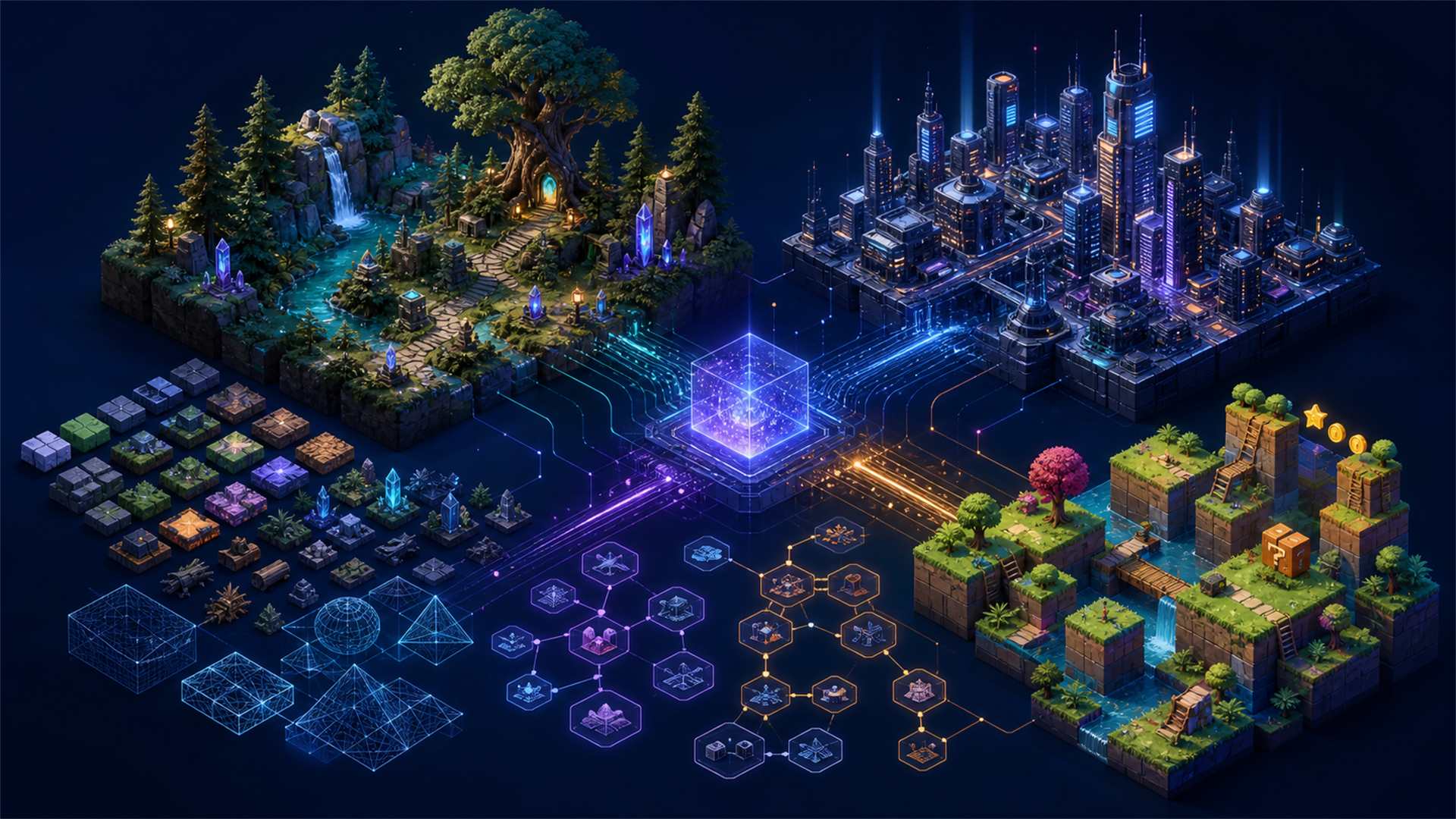
At its heart, AI game generation functions by interpreting user-supplied text prompts and subsequently generating all necessary components of a playable game. This includes everything from the foundational code and intricate game logic to the visual assets and sound design. The AI platforms act as intelligent development studios, translating conceptual ideas into tangible interactive experiences. What once demanded months of painstaking manual labor can now be achieved in a fraction of the time, often within minutes, presenting a paradigm shift in how games are conceived and brought to life.
The technological marvel behind this innovation relies on sophisticated multimodal AI models. These systems are adept at understanding the nuances of natural language and translating them into the structured elements of game development. The process typically begins with prompt analysis, where AI identifies the game type, desired mechanics, aesthetic style, and player interactions. Following this, asset generation commences, producing 2D sprites, 3D models, textures, and animations. Concurrently, code generation writes the game's logic, controls, and rules, often leveraging popular engines like Unity (C#) or Three.js (JavaScript). Finally, all these disparate elements are seamlessly integrated into a cohesive, playable game, ready for iterative refinement based on user feedback.
One of the most compelling advantages of AI game generation is its ability to drastically reduce development timelines. Traditional game development workflows often span weeks or even months for a basic prototype. In stark contrast, AI-assisted creation can yield a playable prototype in as little as 3 to 15 minutes. This efficiency gain, which some studies suggest can be as high as a 92% reduction in initial prototyping time, liberates creators from the laborious technicalities, allowing them to focus more on innovative design and narrative.
The capabilities of these AI platforms are not confined to a single genre or style. From classic 2D platformers with their side-scrolling adventures to intricate 3D shooters and sprawling top-down RPGs, AI can accommodate a wide spectrum of game types. This versatility is powered by advanced AI models, including Large Language Models (LLMs) for logical structures, diffusion models for visual asset creation, 3D generative models for geometry, and audio synthesis models for immersive soundscapes. Furthermore, the integration of world model technology allows for the simulation of persistent environments with realistic physics and object interactions, pushing the boundaries of dynamic gameplay.
Beyond rapid prototyping, AI-generated games are increasingly viable for commercial deployment. Platforms offering these services provide commercial licensing options, allowing creators to export their projects as Unity builds, WebGL experiences, or standalone executables. This opens avenues for independent developers and smaller studios to compete on a more even footing with larger entities, accelerating market entry and fostering a more diverse gaming ecosystem. The generated assets and code are typically included under these licenses, offering a complete package for commercialization.
It's crucial to understand that AI game generation is not about replacing human creativity but augmenting it. The process is inherently iterative, encouraging a collaborative loop where users provide initial prompts, AI generates content, and then users refine their ideas through subsequent instructions. This human-AI partnership fosters a more fluid and experimental development cycle, enabling rapid iteration and the exploration of novel game mechanics and experiences that might be too costly or time-consuming to pursue with traditional methods.
As AI technology continues its rapid evolution, we can anticipate even more sophisticated capabilities in game generation. The refinement of AI models, combined with increasing computational power, will undoubtedly lead to higher fidelity assets, more complex game logic, and an even more intuitive prompt-to-play experience. This represents not just a new tool for game development, but a foundational shift that promises to unlock unprecedented creative potential within the gaming industry, making the dream of creating games more accessible to everyone.
Source Insight: This report was curated based on original coverage from seeles.ai.
Source: seeles.ai