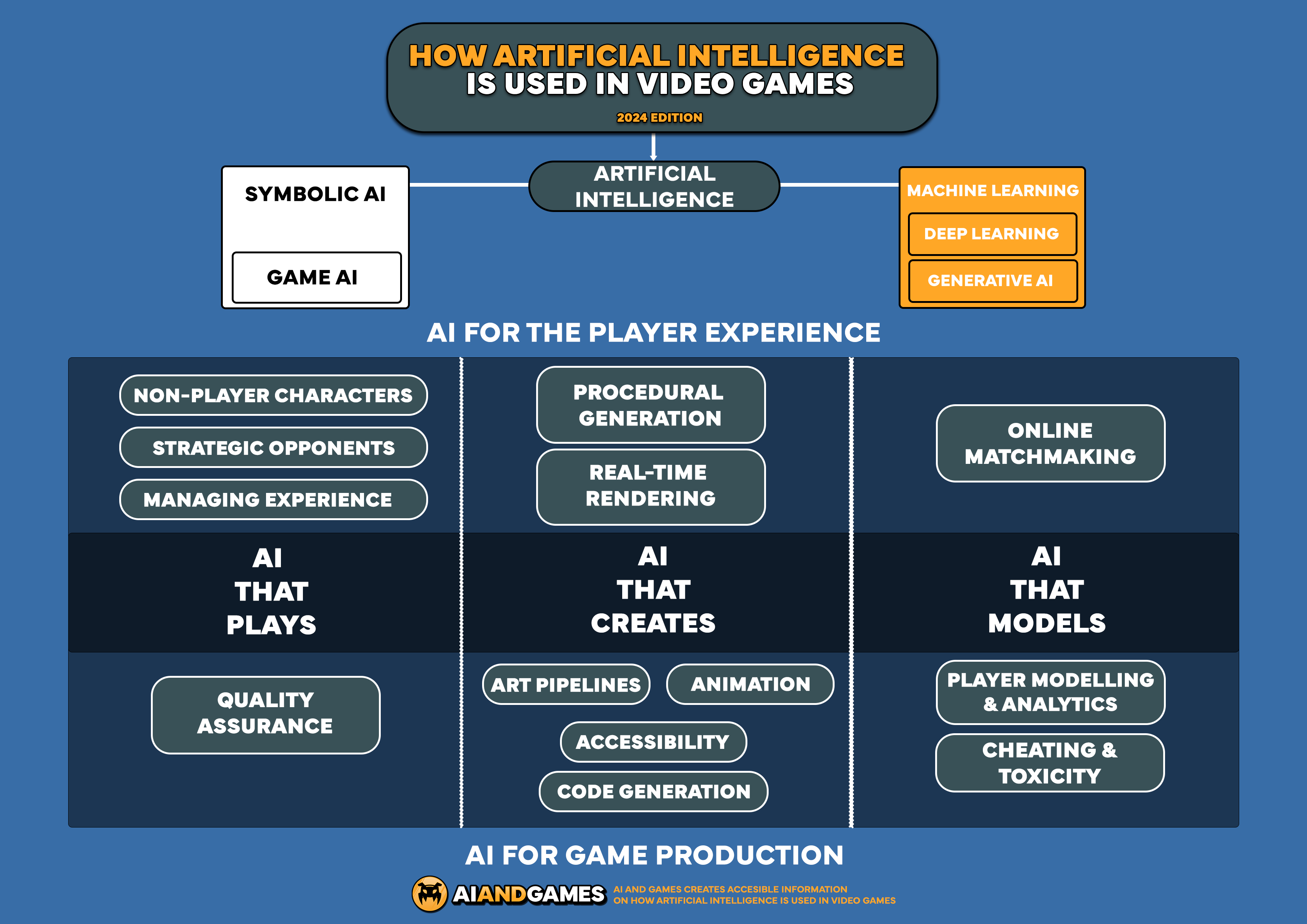
The gaming industry stands at the precipice of a monumental shift, largely propelled by the accelerating capabilities of artificial intelligence. Central to this transformation is the emergence of AI-powered procedural quest generation, a paradigm that is fundamentally altering how narratives, missions, and interactive challenges are conceived and executed within digital worlds. Historically, the meticulous craft of quest design has been a labor-intensive endeavor, demanding extensive manual scripting, narrative writing, and intricate coordination across diverse development teams. As virtual landscapes expand in scope and complexity, the traditional approach becomes increasingly resource-intensive, time-consuming, and difficult to scale effectively. It is within this burgeoning challenge that AI presents itself as not merely an enhancement, but a groundbreaking solution.
The Nuance of Procedural Quest Generation
At its core, procedural quest generation involves the algorithmic automation of mission creation, objective setting, and narrative event structuring, moving beyond pre-scripted manual inputs. While early iterations of procedural systems often relied on rudimentary templates and random variables, resulting in repetitive fetch quests or simplistic combat assignments, contemporary AI has introduced unprecedented sophistication. Modern AI, particularly through the integration of Large Language Models (LLMs), reinforcement learning, and advanced player behavior modeling, now enables the creation of dynamic variations and contextually rich storytelling. This allows for experiences that feel organically crafted rather than mechanically assembled, pushing the boundaries of interactive narrative.
AI as the Catalyst for Dynamic Questlines
Artificial intelligence models possess the unique ability to analyze a multifaceted array of in-game data points: player behavior patterns, past choices, character attributes, and prevailing world conditions. This analytical prowess allows AI to generate quests that are not only meaningful but also deeply personalized and reactive to the evolving game state. This marks a profound departure from static mission boards. Instead, AI-driven systems craft objectives in real-time, responding to emergent scenarios within the game world. For instance, a resource scarcity in a virtual town could trigger an AI-generated supply-run quest. Similarly, player actions that lead to a faction losing territory might spawn missions focused on retaliation or diplomatic intervention. Even the subtle shifts in relationships between Non-Player Characters (NPCs) can be leveraged by AI to create quests designed to influence these evolving dynamics. Such quests arise from a simulated reality rather than a pre-defined script, transforming storytelling into a vibrant, living narrative ecosystem.
The Integral Role of Large Language Models
Large Language Models are proving to be indispensable in elevating the narrative depth and authenticity of AI-generated quests. These sophisticated models can generate nuanced quest descriptions, intricate branching dialogues, and adaptive NPC interactions that seamlessly adjust to a player's individual style and previous engagements. This capability transcends the limitations of fixed dialogue trees, enabling NPCs to engage in more natural conversations, recall past player encounters, comment on current world events, and even initiate entirely new story arcs. Imagine an NPC remarking, “The bandit attacks have grown stronger since you last helped us. Will you stand with us again?” This seemingly organic interaction can be automatically generated based on the player's historical actions and the prevailing game context, imbuing the narrative with a depth that surpasses mere repeated lines of text.
Transformative Advantages for Game Developers
The adoption of AI in quest generation offers a multitude of benefits for game developers. Firstly, it promises a significant reduction in production costs and development time. Crafting the thousands of quests and millions of words of dialogue often required for AAA role-playing games is an immense undertaking; AI automation drastically alleviates this workload without compromising quality. Secondly, it fosters infinite replayability. Each playthrough can offer a uniquely tailored experience, vastly extending a game's longevity and mitigating content exhaustion. Thirdly, AI facilitates a truly personalized player experience, with adaptive systems responding to individual playstyles in a manner akin to advanced recommendation algorithms. Finally, for the burgeoning market of live-service games, AI enables the continuous delivery of fresh missions and challenges without demanding constant, labor-intensive content drops from development teams.
Pioneering Real-World Applications
The theoretical promise of AI-driven quest generation is steadily transitioning into tangible applications. Numerous contemporary titles and cutting-edge research initiatives are actively exploring and implementing AI-powered mission systems. This includes open-world survival games leveraging generative narrative frameworks, simulated ecosystems where AI dictates conflicts and their consequences, and projects integrating LLM-based NPC interaction layers with procedural mission crafting. These advancements hint at a future where gaming worlds are not merely static maps populated with pre-determined events but rather living, breathing universes that dynamically evolve around the player.
Navigating the Challenges and Ethical Landscape
Despite its transformative potential, the implementation of AI quest systems is not without its complexities. A critical challenge lies in striking a delicate balance between algorithmic randomness and narrative coherence. An overabundance of procedural content risks devolving into chaotic or emotionally shallow experiences if not meticulously curated. Developers must also contend with significant ethical considerations, including the potential for bias in AI-generated narratives, the imperative for robust quality control and safety filtering mechanisms, and the ongoing effort to prevent repetitive structural patterns through intelligent AI training. In this evolving landscape, human writers will retain an indispensable role, transitioning from primary content creators to essential curators and overarching world architects, guiding and refining the AI's creative output.
The Unfolding Future of Interactive Storytelling
Looking ahead, the gaming landscape of the near future will likely feature fully dynamic RPGs where narratives are not merely consumed but actively emerge and evolve from complex simulations rather than rigid scripts. AI will serve as a powerful tool, empowering developers to redirect their focus from the arduous cycles of content creation towards cultivating heightened creativity and innovative design. The future of gaming is thus defined not by static, immutable storytelling, but by the relentless pursuit of adaptive narrative intelligence, promising worlds that are endlessly surprising and profoundly personal.
Source Insight: This report was curated based on original coverage from daydreamsoft.com.