
Vibe Gaming• 6 min read
Navigating the AI Frontier in Game Development: A Vibe-Coding Glossary
As AI continues to redefine creative industries, a specialized glossary emerges for game developers.
ALTERED BRILLIANCE IS LIVE.ALTERED BRILLIANCE IS LIVE ON GOOGLE PLAY.Read the product story →
As AI continues to redefine creative industries, a specialized glossary emerges for game developers.
The integration of Artificial Intelligence into game development workflows is no longer a futuristic concept but a present-day reality, rapidly evolving the landscape of how games are conceived, designed, and built. A recent glossary, aptly titled the Vibe-Coding Glossary, serves as an indispensable compass for game developers navigating this new frontier. Unlike general AI glossaries, this resource is meticulously curated for practitioners, emphasizing terms and tools directly applicable to shipping game levels and experiences.
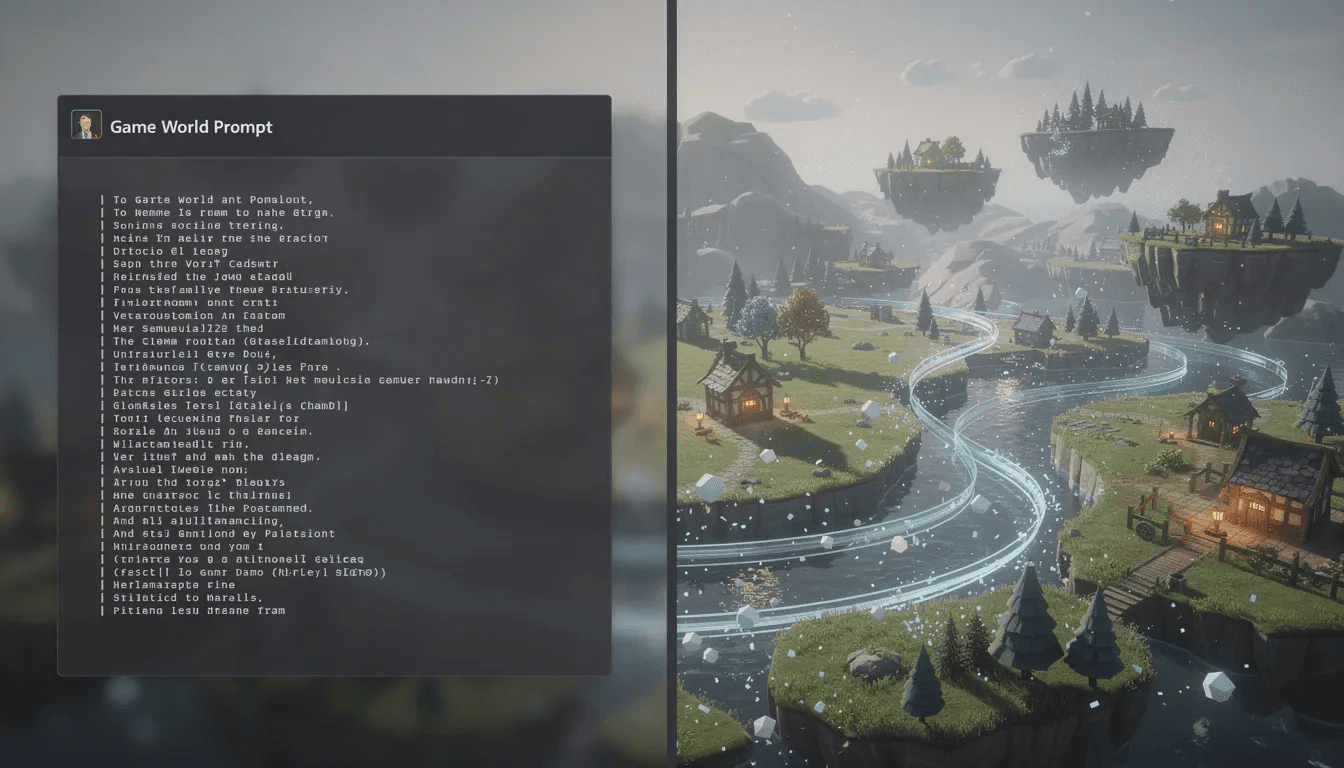
At the heart of this transformation is Vibe-Coding, a paradigm shift introduced and popularized around 2025. It fundamentally redefines the developer's role, moving from granular syntax crafting to high-level creative direction. Developers articulate their intentions in natural language, and AI agents translate these descriptions into functional code and game assets. This allows creators to focus on the "what" and "why" of game design, offloading the "how" to intelligent systems. The result is an unprecedented acceleration in prototyping, iteration, and ultimately, game production.
Several dedicated AI tools are making significant strides in empowering game developers. Bolt, for instance, offers a browser-based AI development environment, generating code and previews from natural language descriptions, perfect for rapid UI prototyping. Similarly, Lovable and Replit provide cloud-based full-stack builders and IDEs, respectively, allowing developers to spin up companion web apps or mini-game prototypes with minimal setup and maximum speed. These platforms embody the spirit of Vibe-Coding, enabling swift realization of game concepts.
Beyond basic scaffolding, AI assistants like Claude are proving invaluable for complex development challenges. With its large context window, Claude can parse entire codebases, debugging intricate logic errors, optimizing game economies, or even drafting extensive Game Design Documents. This capability dramatically reduces the time spent on arduous analysis and allows developers to pinpoint issues with unparalleled efficiency. Its ability to reason over long, complex documents makes it a critical asset for comprehensive project oversight.
The visual aspect of game development is also being profoundly reshaped. ComfyUI offers a node-based visual workflow for local AI image generation, enabling developers to create sprites, concept art, and environment textures without incurring API fees. By leveraging tools like LoRA (Low-Rank Adaptation) for fine-tuning, developers can train these models on their game's specific art style, ensuring visual consistency across all AI-generated assets. This democratizes high-quality asset creation and significantly speeds up the art pipeline.
Code editors are also evolving to integrate AI seamlessly. Cursor, a fork of VS Code, embeds deep LLM (Large Language Model) integration, allowing developers to refactor systems, explain code, or implement features across multiple files directly within their IDE. This goes beyond simple auto-completion; it’s an AI pair programmer that understands the entire codebase context, enhancing productivity and reducing cognitive load. This integration represents a leap towards more intuitive and context-aware development environments.
Perhaps the most exciting development is the emergence of AI-native game development platforms such as Rosebud AI and Verse8. These platforms are explicitly designed around the Vibe-Coding paradigm, generating playable game logic and assets from natural language descriptions. They scaffold entire game systems—from enemy spawning to UI—allowing developers to describe mechanics and worlds in plain English and see them come to life in real-time. This bespoke approach to AI in game development offers a glimpse into a future where game creation is more accessible and agile.
The overarching theme is iterative prompting and intent-driven development. Game developers are no longer solely coders but increasingly prompt engineers, guiding AI models through successive refinements. This workflow fosters rapid creative iteration, enabling the generation of multiple playable micro-prototypes in pre-production before committing to a full build. The Vibe-Coding Glossary not only defines the tools and concepts but also implicitly champions this new, dynamic, and highly efficient method of bringing virtual worlds to life.
Ultimately, the Vibe-Coding Glossary underscores a pivotal shift: game development is becoming a more collaborative process between human creativity and artificial intelligence. This synergy allows for unprecedented speed, flexibility, and innovation. Developers are empowered to focus on the unique narrative, mechanical, and artistic visions, while AI handles the heavy lifting of implementation. This new era promises a vibrant future for game creation, where the only limit is imagination.
Source Insight: This report was curated based on original coverage from vibecode.game.
Source: vibecode.game