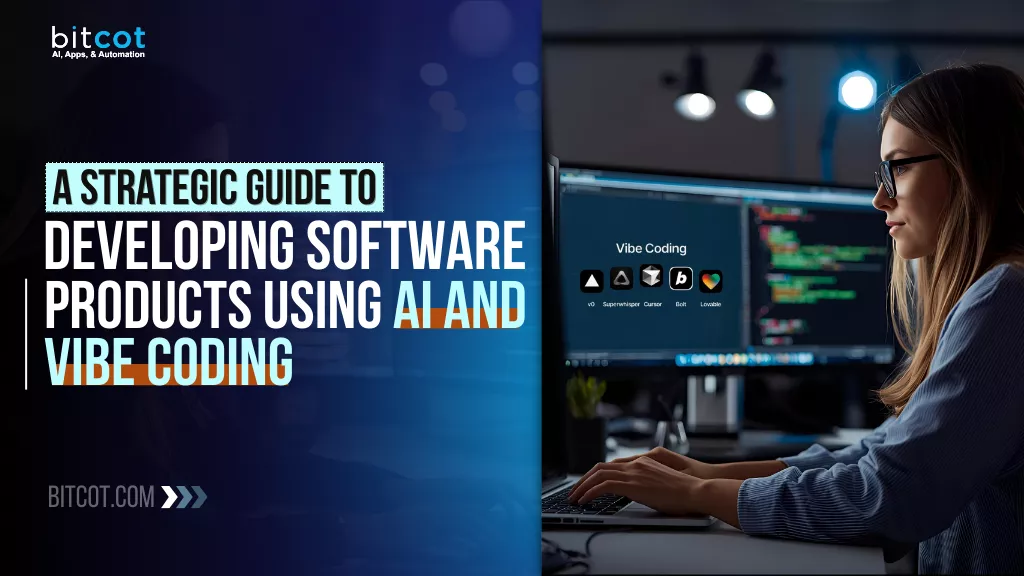
The landscape of software development has undergone a seismic shift, with Artificial Intelligence now profoundly influencing the very act of writing code. By 2026, the concept of "vibe coding" has emerged as a dominant paradigm, transforming how developers approach their craft. This methodology centers on describing desired outcomes in natural language, allowing AI to shoulder the bulk of code generation. This transition is not merely theoretical; current data indicates that a staggering 92% of U.S. developers integrate AI tools into their daily workflows, with AI contributing to an estimated 41% of global code.
This evolution marks a significant departure from traditional coding practices. Instead of meticulously crafting syntax, developers now function more as architects or directors, setting clear objectives and vision for the AI to implement. This frees up valuable time and cognitive resources, enabling faster prototyping, streamlining of repetitive tasks, and even democratizing app creation for individuals without deep technical backgrounds.
Understanding the Core of Vibe Coding
Vibe coding can be defined as an AI-assisted development process where the developer's primary interaction is through natural language descriptions of their goals. The focus shifts from the granular details of syntax and implementation to the qualitative assessment of whether the generated code functions as intended and delivers the desired user experience. In essence, the developer's role evolves into one of evaluation and refinement, rather than direct construction.
The genesis of this concept can be traced to early 2025, notably observed by figures like Andrej Karpathy. He described an experience of accepting AI-generated code suggestions almost implicitly, driven by the AI's capability to understand context across entire codebases and perform complex edits. This was made possible by advancements in large language models and the maturation of AI-powered integrated development environments (IDEs) capable of autonomous planning, writing, and debugging.
The Surge in Vibe Coding Popularity
The widespread adoption of vibe coding is a direct response to persistent challenges within the development community. Mundane yet critical tasks, such as setting up complex authentication systems or generating standard CRUD operations, are now largely automated. This has led to a dramatic compression of development timelines, with projects that once spanned months now achievable in days or hours. Furthermore, it has lowered the barrier to entry, empowering designers, entrepreneurs, and other non-technical professionals to bring their application ideas to fruition.
The impact of vibe coding is underscored by its cultural recognition; "vibe coding" was notably named the Collins Dictionary Word of the Year in 2025, reflecting a massive surge in public interest. This trend signals a broader redefinition of the developer's role in the technological ecosystem.
Navigating the Mechanics of Vibe Coding
The operational flow of vibe coding typically follows a cycle: Intent → Prompt → Generate → Review → Iterate → Ship. This streamlined process emphasizes clear articulation of requirements. Rather than specifying the *how*, developers define the *what*. For example, instead of instructing an AI to "add a try-catch block," a developer might prompt, "ensure all form fields are validated and display inline error messages upon submission." The AI then translates this intent into functional code.
Developing proficiency in crafting precise and effective prompts has become a crucial skill. The most successful prompts are detailed, anticipating potential edge cases and specifying desired outcomes with clarity. An example of an effective prompt would be: "Implement a responsive pricing table featuring three distinct tiers: a Free plan, a Pro plan at $20/month, and a custom Enterprise option," rather than a vague request like "add a pricing page."
Popular Tools and Emerging Ecosystem
Several tools are at the forefront of this revolution, facilitating the practice of vibe coding. Platforms like Cursor, Windsurf, GitHub Copilot, and Bolt.new offer varying degrees of AI assistance, from intelligent code completion to full-blown autonomous code generation. These tools are not just assisting developers; they are fundamentally changing the development environment, integrating AI capabilities directly into the coding workflow.
The Criticality of Human Oversight: 'Vibe & Verify'
Despite the remarkable speed and efficiency gains, the rise of vibe coding is not without its challenges. Significant concerns revolve around security vulnerabilities that may be inadvertently introduced by AI-generated code, the increased complexity of debugging AI-generated solutions, and the long-term maintainability of codebases heavily reliant on AI. To address these, a strategy often referred to as "Vibe & Verify" is gaining prominence. This approach advocates for a synergistic relationship where AI handles the bulk of routine coding and rapid prototyping, while human developers rigorously review, test, and validate critical components.
This balance is essential for responsible AI adoption in software development. While AI excels at generating code quickly and efficiently, human developers remain indispensable for ensuring code quality, security, and adherence to project standards. The future of coding lies in this collaborative synergy, harnessing the power of AI while retaining the critical judgment and expertise of human professionals.
Source Insight: This report was curated based on original coverage from daily.dev.