News• 6 min read
Navigating the Shifting Tides of Gaming Investment
The gaming industry's investment landscape is experiencing a significant resurgence, with M&A activity reaching a four-year high.
Official canonical publication: krizek.tech
ALTERED BRILLIANCE IS LIVE ON GOOGLE PLAY. Read the product story →

The gaming industry's investment landscape is experiencing a significant resurgence, with M&A activity reaching a four-year high.
Official canonical publication: krizek.tech
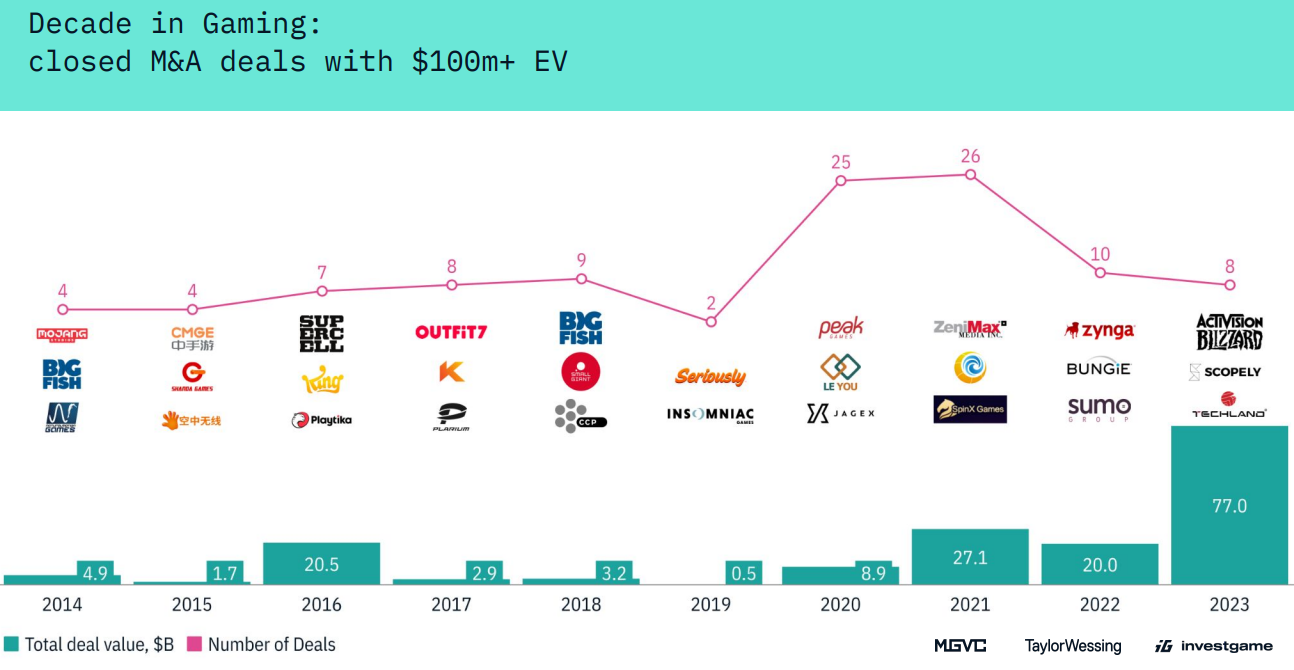
The global gaming industry is witnessing a robust revival in its mergers and acquisitions (M&A) landscape, reaching an impressive $2.3 billion in the second quarter of 2026. This marks the strongest quarter for deal-making since 2022, signaling renewed investor confidence and a strategic realignment within the sector. The current surge is not propelled by colossal mega-mergers, but rather by a significant uptick in mid-market deals, particularly within the dynamic PC and mobile gaming segments. This shift reflects a maturing industry where targeted acquisitions of established studios with proven intellectual property are becoming the norm, allowing larger entities to strategically expand their portfolios and diversify their offerings.
After a period of relative quiet, the gaming industry's M&A activity has shown remarkable signs of life. The $2.3 billion in transaction value recorded in Q2 2026 underscores a healthy volume of mid-sized acquisitions rather than a single dominant deal. Transactions valued over $100 million have reached their highest frequency since the pandemic era, indicating a collective belief among investors and larger corporations in the strategic value of integrating established creative powerhouses. Notable examples like Scopely's $1 billion acquisition of mobile developer Loom and the planned sale of Wemade founder Park Kwan-ho's 35% stake to Chinese investor NeoPulse exemplify this trend. This strategic focus targets established studios across both PC and mobile, including entities such as Playstack and Fenris Creations, demonstrating an appetite for bolstering content libraries and market presence through proven entities.
While investment flourishes, the performance across different gaming platforms presents a more nuanced picture. The PC market is experiencing robust growth, whereas the mobile sector navigates considerable headwinds, and the console market undergoes a fascinating transition.
The PC gaming sector has exhibited an impressive 13% year-on-year growth, fueled by a powerful combination of highly anticipated franchise sequels and the successful introduction of fresh intellectual properties. Key releases have significantly contributed to this expansion, demonstrating a thriving ecosystem that embraces both beloved series and innovative new experiences. This growth signals a healthy and engaged player base, eager for diverse content on the PC platform.
The console market, while stable overall, reveals a dramatic reordering among its key players. Nintendo has emerged as the unequivocal leader, with its revenue surging by an astonishing 90% year-on-year. This phenomenal growth is directly attributable to the successful launch and sustained strong sales of the *Switch 2* console and its accompanying software lineup. Nintendo's monumental revenue increase was instrumental in offsetting declines experienced by both PlayStation and Xbox, thereby stabilizing the overall console market and preventing a negative performance trend.
In contrast, Sony and Microsoft faced notable challenges. PlayStation's revenue saw a 5% decline, primarily due to hardware softness, though this was partially mitigated by growth in its PSN services and digital software sales. Xbox experienced a more pronounced downturn, with a 7% decrease driven by a substantial 33% drop in hardware sales and a 5% reduction in content and services revenue. These figures highlight the intensely competitive nature of the console market and the critical importance of a compelling hardware-software ecosystem.
The mobile gaming market, conversely, is showing distinct signs of maturity and saturation. In-app purchase spending decreased by 4% year-on-year, while new game installs plummeted by 12% to multi-year lows. This suggests an increasingly difficult and costly environment for user acquisition. Furthermore, the market remains heavily dominated by established titles, with an analysis revealing that 65% of the top 20 mobile games are at least four years old. This entrenched landscape leaves limited room for new entrants to gain significant traction, posing a challenge for innovation and growth within the sector.
Beyond M&A, both public and private investment in the gaming sector have experienced a dramatic resurgence, underscoring strong investor confidence. Public market fundraising witnessed a 67% increase compared to the previous year, supported by significant financial events such as Liftoff's $0.5 billion IPO and PlaySimple's planned $0.35 billion listing. Fellowship Entertainment's proposed spin-off from Embracer further signals a vibrant public market.
Private investment saw even more explosive growth, multiplying sixfold year-on-year to reach a staggering $3.1 billion. A substantial portion of this capital is flowing into gaming-adjacent technologies, with the AdTech sector benefiting significantly from AppsFlyer's $1 billion funding round, backed by major players like MoldCo, DeepMind, Meta, and Unity. Artificial intelligence is another critical area attracting substantial investment, with firms like General Intuition, Odyssey, and Decart securing significant funding. This trend indicates a strong belief that AI will revolutionize game development, marketing, and player engagement in the years to come, shaping the future trajectory of the entire industry.
Source Insight: This report was curated based on original coverage from attractmo.de.
Source: attractmo.de